Hello world! Today we're announcing the start of the TableOS beta as well as officially launching TableOS.net as a public facing website.
Click around the rest of the site to get a full picture of what TableOS does and how it works, but the tl;dr is this:
TableOS is a locally-installed remotely-supported version of Debian Linux designed for self hosting.
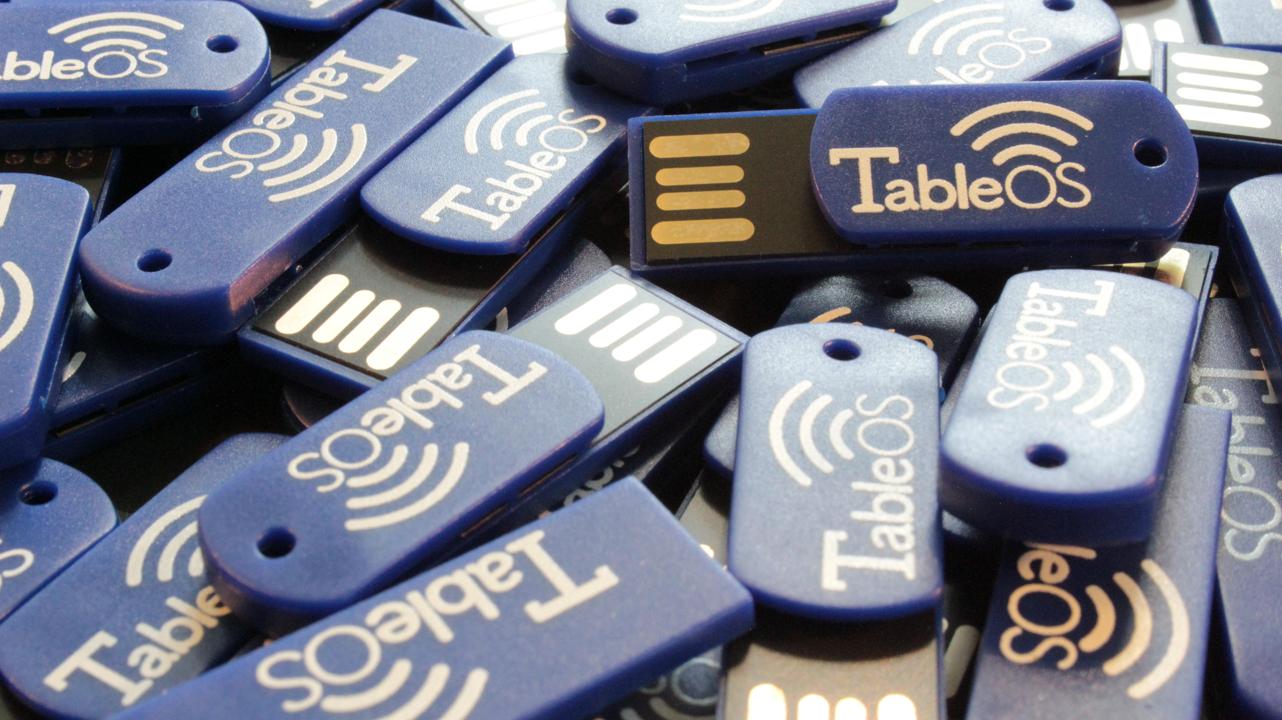
Just about any laptop or personal computer can be converted into a TableOS server. Installation is accomplished via a USB stick shipped from us (pictured above) or by downloading an ISO file and burning your own installation media.
For non-technical users, TableOS lowers the barrier to entry, making self hosting an option even for people who never use a command line. For technical users, TableOS cuts out time spent on boring grunt work, both during setup (no messing with Caddy or Docker) and over the long haul (updates, security).
The whole idea is right there in our tagline: self hosting made simple.
A Little History
For us, TableOS was born of necessity. A family business spanning three generations, we've been developing, selling, and supporting software (mostly for recruiters and HR people) for almost four decades, starting out in 1989 by sending floppy disks through the mail.
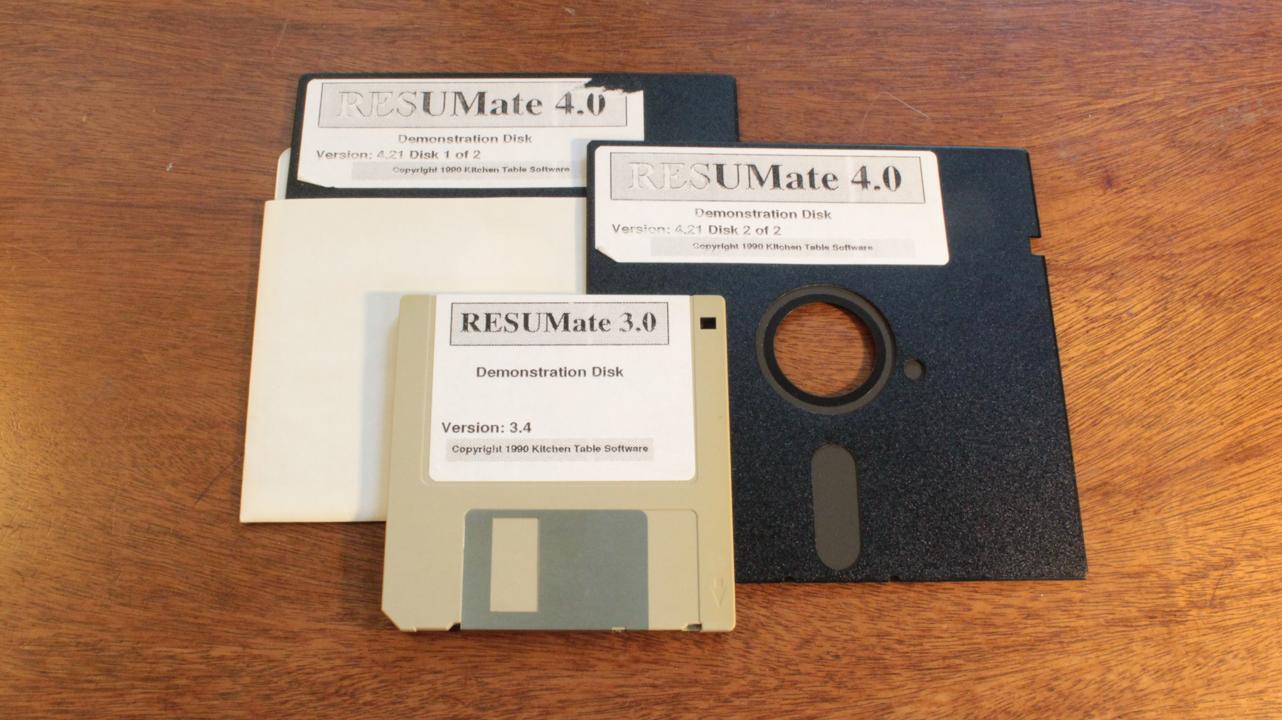 Rigid envelopes and a little postage could send 1 megabyte (1MB) of data anywhere.
While those days are long in the past, the 2020s have presented us with new distribution issues, particularly around our dependence on Microsoft and other industry behemoths. The rise of cloud computing* had a lot of benefits, but it also placed ever hungrier middlemen between us and our customers. And over the last few years, as our margins were eaten by giants, it became clear that we had to find another way.
(*The term "cloud computing" was created in 1996 to help sell Compaq business servers, but didn't enter common usage until after consumer facing advertising campaigns in the 2000s.)
As we worked our problem, the system originally conceived as a narrow solution for our specific needs began to widen and branch out. If we figured out how to host our software at a customer's premises, why couldn't we host other programs as well? And if we're hosting other software, doesn't that just make this an operating system? That lead to another two years of development, but now we've got something we're ready to show.
The Service
Gaze across the wide world of open source and there is already a software ecosystem* out there that is every bit as secure and capable as what's on offer from Google, Apple, or anybody else. But it is scattered, barely documented, and maintained by people who were overburdened even before AI pull requests. We want to change that. We want TableOS to be a platform for the kind of open source software that lets people take back their digital lives.
(*The "software ecosystem" is another 90s term whose meaning has shifted; originally coined by computer scientists to help understand functional and developmental interdependence, today it is used as a less intimidating synonym for a company's hard-to-escape "walled garden".)
At launch, we'll be supporting two open source programs, Minecraft server Crafty Controller and media streamer Jellyfin. Once those are up and running - and we've had a chance to evaluate our infrastructure under real usage - we'll expand our software catalog to include more programs, including Home Assistant, Immich, and Nextcloud.
With TableOS, the customer has control from the start. During installation, the end user creates and enters the admin and encryption passwords; we have access to neither. After installation, the (non-root) TableOS Local Management System (LMS) keeps the server and applications updated and available, but it cannot monitor activity or read any application data. And while our code is copyrighted and not distributed under a free license, the entire LMS codebase is visible as uncompiled Python files on the server for those who wish to inspect them.
If a customer cancels service, the server itself is unaffected. It is and remains the customer's property and will continue to run as a Debian Linux machine with all installed applications. Without a subscription it will no longer update automatically or be available from TableOS.net, but everything else stays the same.
Finally, we recognize that TableOS is nothing without the software that runs on it. Whether someone wants to host a single application or build themselves a fully self hosted cloud suite, the programs are what matters; the operating system is just there to keep things working and stay out of the way. So we are voluntarily splitting the revenue from each TableOS subscription 50-50 with the developers of the software being hosted.
Starting Up
To be clear, we are a private, for profit company and we decide what programs we support and offer on TableOS. But we don't have any investors to please, nor are we trying to make it to an IPO. This is a family software company that's lasted for thirty-seven years so far, not some panicky startup coming out of stealth mode. We don't know where TableOS will ultimately go, but we do know that no one should have to rely on huge conglomerates for computer basics like chat and file storage, that nobody's music collection or vacation photos actually require a data center.
One reason we built TableOS was so that we can use it ourselves. As much as anybody, we want to get away from services that mine us for data and sell us as content, and we cannot do that alone. We think TableOS will open self hosting to a much wider universe of people than has been possible before, a broad user base with diverse interests that can provide the kind of stable financial support needed for a real software ecosystem to develop.
If you are a user of open source software and would like to participate in the TableOS beta, please fill out the form below and enter your email.
If you are a developer of open source software, please see the "For Developers" link at the bottom of this post.
Beta Signup
Beta testers will be selected at random and receive a free TableOS subscription that must be activated within 2 weeks, but is then good for 1 year.
Emails not selected for the beta will receive an early entry code to be able to sign up for TableOS before it becomes publicly available.
SIGN UP FOR BETA
Interested in:
Email:
Name:
Thoughts?:
All emails from us contain a 1-click unsubscribe. We will not sell or otherwise distribute your email address. We make our money selling subscriptions to customers, not data to marketers.
Further Reading
Why Self Host? - A brief essay on the importance of self hosting in today's world.
For Developers - Details on requirements and payments.
About Us - A little more history.